SQL Server Blog

Azure Data Studio is a free open source tool for working with Microsoft SQL Server databases. Azure Data Studio is based on Visual Studio Code and its interface is almost identical, the only...
The Oracle/PLSQL LEAD function is an analytical function that allows you to query more than one row in a table, while not having a table to join. Returns values from the next row in the table. To...
Oracle/PLSQL LAST_VALUE function returns the last value in an ordered set of values from the analytical window. It is similar to the functions FIRST_VALUE and NTH_VALUE. Oracle/PLSQL syntax of...
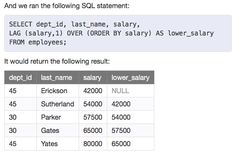
Oracle/PLSQL LAG function is an analytical function that allows you to query more than one row in a table, while not having an attached table. This returns values from the previous row in the...
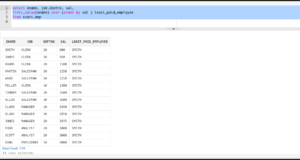
Oracle/PLSQL FIRST_VALUE function returns the first value in an ordered set of values from the analytical window. It is similar to FIRST_VALUE and NTH_VALUE. Oracle/PLSQL syntax of FIRST_VALUE...
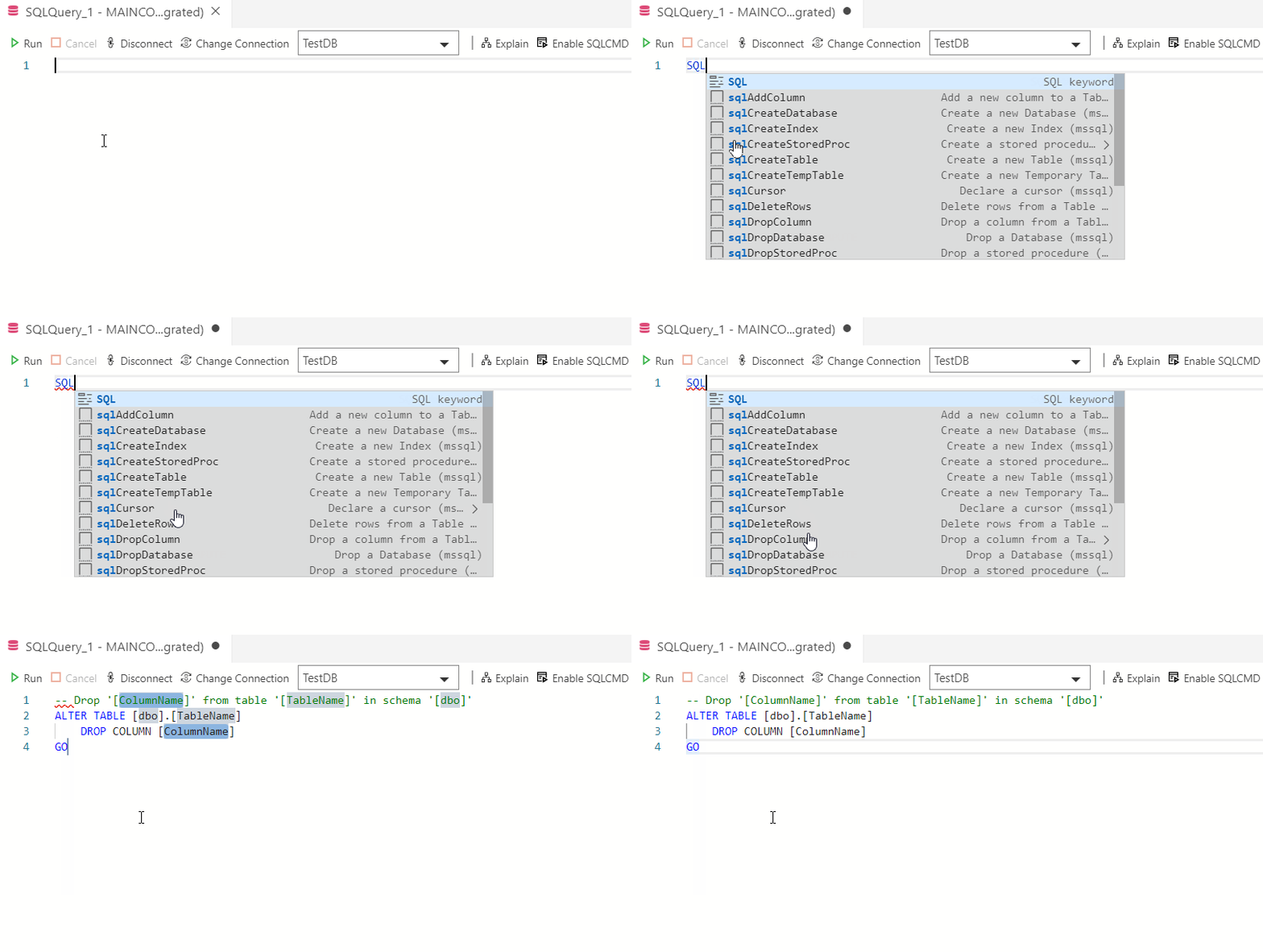
This material provides an overview of 9 best tools that programmers and administrators use to work with Microsoft SQL Server. Azure Data Studio Azure Data Studio is a free, cross-platform, open...
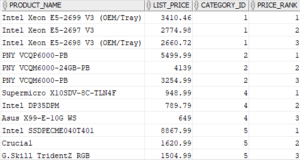
Oracle/PLSQL RANK function returns the value rank in the value group. It is very similar to the DENSE_RANK function. However, the RANK function may not return a consecutive ranking if the values...
Oracle/PLSQL CREATE TABLE operator allows you to create and define a table. CREATE TABLE syntax in Oracle/PLSQL CREATE TABLE table_name_id ( column1_id datatype [ NULL | NOT NULL...

The Oracle/PLSQL function DENSE_RANK returns the string rank in an ordered group of strings. It is very similar to the RANK function. However, the RANK function can cause an inconsistent ranking...
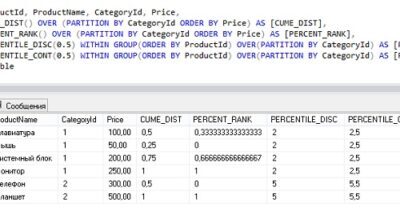
Oracle/PLSQL CUME_DIST function returns the cumulative distribution of values in the value group. The CUME_DIST function will return a value that is > 0 and <= 1. You can use CUME_DIST in...
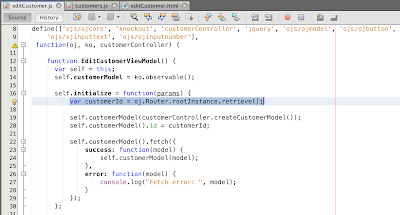
Oracle/PLSQL COVAR_SAMP function returns selective covariance of a set of number pairs. Oracle/PLSQL syntax of function COVAR_SAMP COVAR_SAMP( expression1_id expression2_id )where:...
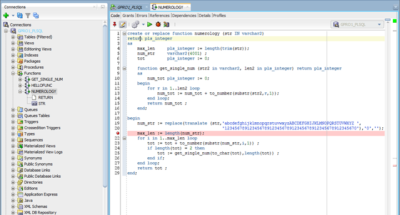
Oracle/PLSQL COVAR_POP function returns covariance of a set of pairs of numbers. Oracle/PLSQL syntax of COVAR_POP function COVAR_POP(expression1_id expression2_id )where:...

Oracle/PLSQL CORR function returns the coefficient of correlation of multiple pairs of numbers. Syntax of Oracle/PLSQL function CORR CORR( n1,m1 ) [ over (analytic_clause_id) ]where:...

SQL - in simple words, it is a programming language for structured queries (Structured Query Language), which is used as an effective way to save data, find its parts, update, extract from the...
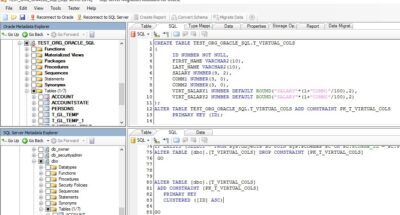
SQL ALTER TABLE statement is used to add, modify or delete columns in a table. ALTER TABLE SQL statement is also used to rename a table. Add a column to a table SQL syntax of ALTER TABLE...
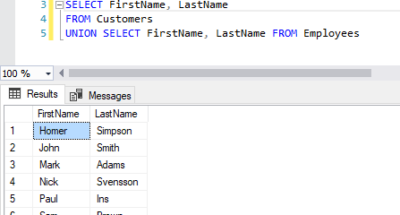
SQL UNION statement is used to combine the resulting sets of 2 or more SELECT operators. It removes repetitive strings between different SELECT requests.Each SELECT statement in UNION must...